APPLIED RESEARCH

ACRP Report 280: Reducing and Managing Disruptive and Unruly Behavior in Airports

TransSolutions contributed to ACRP 07-20 as part of a multidisciplinary research team examining how airports can better prevent and manage disruptive and unruly behavior. 

The team combined literature and policy review, behavioral science, and stakeholder engagement to understand the root causes of such incidents and how they manifest across different areas of airport operations.   

Get Report Here: 

ACRP Report 280

PARAS 0062: Mitigating Impacts to Airport Security and Operations from Locally Hosted Major Events

TransSolutions led the PARAS 0062 research team which examined how airports can prepare for and manage the heightened operational and security demands that accompany large-scale community events. 

The project team combined a robust literature review with extensive interviews involving more than two dozen U.S. airports, law enforcement partners, and federal stakeholders to identify proven approaches for maintaining security, coordination, and continuity before, during, and after major events.    
Get Report Here: 
PARAS 0062

ACRP Report 252: Airport Baggage Handling System
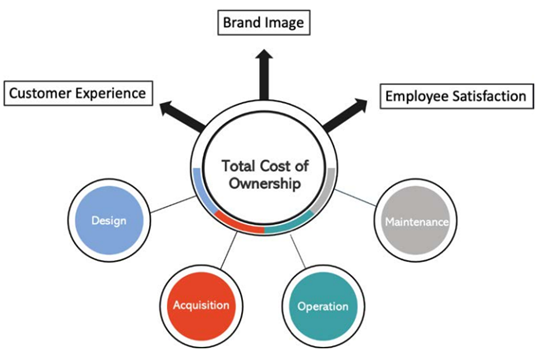
 Decision-Making Based on Total Cost of Ownership

The traditional TCO model for assets, revised to represent BHS conditions and owner priorities

TransSolutions participated in ACRP 03-53 as part of a multidisciplinary team that examined how airports can evaluate baggage handling investments through a total cost of ownership framework that balances capital, maintenance, and operational considerations. 

TransSolutions led a detailed case study comparing conventional conveyor systems and emerging Individual Carrier Systems (ICS) to identify and analyze differences in efficiency, maintenance, and lifecycle costs.   

Get Report Here:
ACRP Report 252

PARAS 0057: Airport Credentialing Office Planning and Design

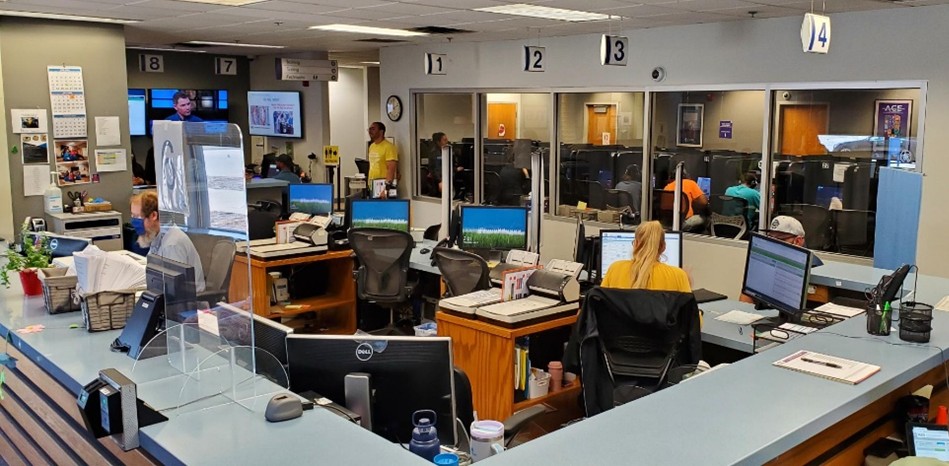
DEN Satellite Badging Office

TransSolutions led the development of PARAS 0057 which offers guidance on designing airport credentialing offices, focused on how physical layout, location, and workflow design can support efficient and secure credentialing operations. 

The team conducted site visits and interviews with airports of varying sizes, documenting real-world credentialing offices and equipment configurations.   

Get Report Here:
PARAS 0057

PARAS 0055: Airport Law Enforcement Staffing

TransSolutions led the PARAS 0055 research which examined law enforcement staffing and deployment within the specialized operational and regulatory context of airports. The project examined how airports can determine adequate law enforcement coverage that meets both TSA-mandated security requirements and local operational needs. 

To translate the findings into practice, the team developed the LEO Staffing Assignment Tool, which calculates FTE staffing needs based on airport characteristics, patrol zones, and scheduling factors, along with a Workload Analysis Tool that uses historical call data to optimize deployment.    

Get Report Here:
PARAS 0055

PARAS 0054: Optimizing Compliance with Airport Security 
Rules and Regulations

TransSolutions contributed to the PARAS 0054 research focused on improving airport compliance with security rules and regulations, recognizing that strong regulatory alignment and a culture of compliance are essential to both safety and operational performance. 

Through interviews with airports of varying sizes and analysis of dozens of publicly available security rule documents, the research identified strategies to strengthen compliance programs and integrate them with broader airport operations.   

Get Report Here:
PARAS 0054

PARAS 0065: Synthesis of Security Practices for Airside Vehicle Operations

TransSolutions led the PARAS 0065 research to identify practical strategies that strengthen airfield security and access control. 

The research team conducted an extensive literature review and interviews with U.S. airports of varying sizes to document how airports manage driver authorization, vehicle permitting, escort procedures, access point control, and technology use.     

Report will be published in January 2026